
Global Timeline: 2000 → 2026
2000–2004: Start of a New Century
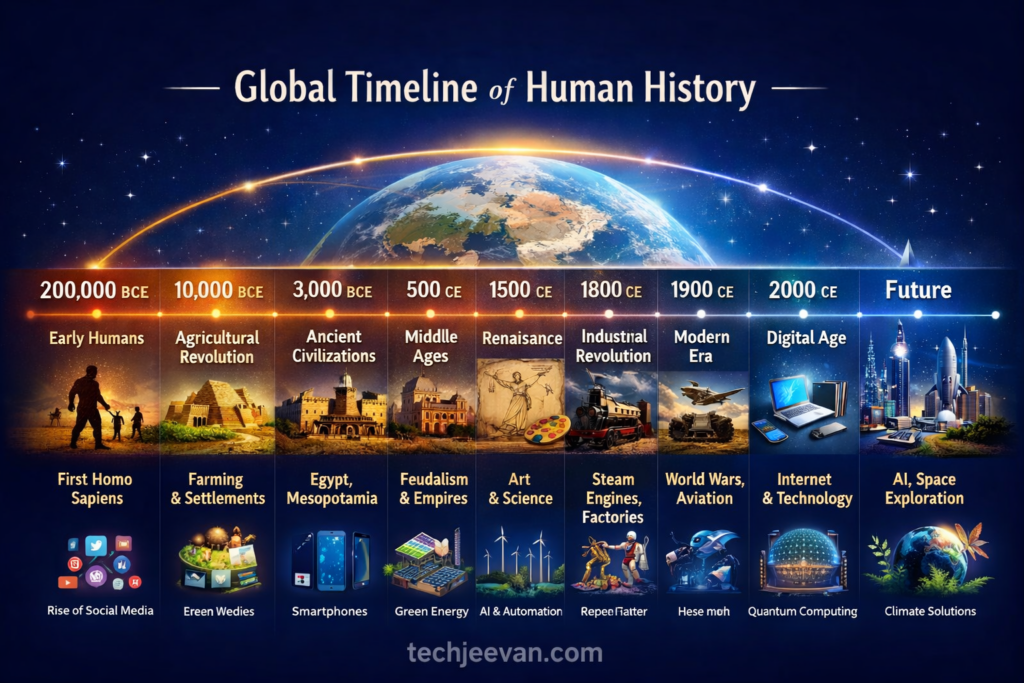
So, the early 2000s set the stage for the world we live in now. The internet took off fast, but then the dot-com bubble made a mess, wiping out a lot of early online companies. Globalization picked up speed everywhere.
Then came 2001, which changed everything. The 9/11 attacks hit the U.S.—the World Trade Center was destroyed, and nothing was the same afterward. Security got a total makeover, and the U.S. went to war in Afghanistan against the Taliban and Al-Qaeda.
By 2002, anti-terror laws became stricter around the world. Europe rolled out the Euro in cash form, and, honestly, just about everyone had a mobile phone or was getting online more.
2003 brought the U.S.-led invasion of Iraq. Saddam Hussein’s government collapsed, but that kicked off a long stretch of instability across the Middle East.
In 2004, the Indian Ocean tsunami was devastating. Countries like Indonesia, India, Sri Lanka, and Thailand were hit hard—one of the deadliest disasters in recent history. And right around then, social media started creeping in. Facebook went live, planting the seeds for an entirely new way to connect.
2005–2009: War, Crisis, and the Smartphone Age
2005 was rough in the U.S.—Hurricane Katrina left deep scars, pushing climate and disaster preparedness into the spotlight. Meanwhile, YouTube launched, turning the world into creators and watchers.
By 2006, social media really started to change how people talked and shared. We got hooked on online video, blogs, and new bits of digital culture.
Everything shifted in 2007—Apple released the iPhone. Suddenly, phones weren’t just for calls—they were your camera, your map, your new wallet, everything. Hello, smartphone era.
Then, in 2008, the global financial crisis hit hard. Major banks collapsed, the housing markets crashed, economies tanked—millions lost their jobs. Fear of what could come next spread everywhere.
2009 was all about trying to climb out of that hole. Cloud computing and app-based businesses started growing. Bitcoin quietly showed up too, hinting at new ideas for money.
2010–2014: Social Media Power, Revolutions, New Geopolitics
By 2010, social media mattered—a lot. Politics, news, even personal relationships ran through platforms and smartphones. Data and digital platforms became super powerful.
In 2011, the Arab Spring shook the Middle East and North Africa as people stood up against their governments in places like Tunisia, Egypt, and Syria. The U.S. killed Osama bin Laden that year. But Syria slipped into a civil war that would drag on for years.
2012 was packed with tech hype—AI, big data, and digital surveillance all ramped up. People started worrying more about inequality and youth unemployment too.
Then came 2013, when the Snowden leaks exposed how much governments were watching their citizens. Suddenly, privacy and freedom on the internet sparked worldwide arguments.
2014 was tense—Russia annexed Crimea from Ukraine, souring relations with the West. ISIS rose up fast in Iraq and Syria, stirring global terror fears. There was also a major Ebola outbreak in West Africa.
2015–2019: Populism, Migration, Climate Pressure, Digital Domination
2015 saw huge waves of refugees fleeing Syria and other war zones, causing major crises in Europe. The Paris Climate Agreement marked a global effort to fight climate change. AI and robots started showing up in everyday conversations.
In 2016, Brexit happened—the UK voted to leave the European Union. Americans elected Donald Trump, and you could really feel the world shifting towards nationalism and populism. Suddenly, misinformation on social media looked like a serious problem.
2017 brought more worries—North Korea’s nuclear threats made headlines, cyberattacks became more dangerous, and the #MeToo movement changed how people talked about power and abuse.
By 2018, the U.S.-China trade war was heating up, hitting supply chains worldwide. Climate protests picked up steam, and issues like AI, facial recognition, and data ethics crowded into public debate.
2019 was full of street protests—from democracy fights to anger about inequality and corruption. The Middle East was still boiling over. And at the end of the year, a mysterious virus popped up in Wuhan, but hardly anyone realized how much it would matter.
2020–2022: Pandemic, War, and Global Shock
2020—nobody really saw what was coming. COVID-19 swept across the globe. Lockdowns started, schools and businesses closed, travel stopped. Millions died, economies crashed, and a mad race for vaccines took over. Life shifted online even more as supply chains got tangled up and health systems struggled.
2021 was about vaccines. Some countries raced ahead, others lagged. New debates flared over public health, personal freedoms, and what to believe. The U.S. left Afghanistan, the Taliban rushed back into power, and global inflation started creeping up.
2022 brought another major shock: Russia’s full-scale invasion of Ukraine. The war was the biggest in Europe for decades. Food, fuel, and fertilizer prices spiked world-wide, and the energy crisis hit hard. Global politics split into firmer blocs—the world felt suddenly more dangerous.
2023–2024: AI Explosion, Conflict, Elections, Climate Stress
2023 was the year generative AI really exploded. OpenAI, Google, and others pushed it everywhere—education, work, coding, business, media. Stress grew in the banking sector, especially in the U.S. and Europe. Climate disasters hit harder, and the Hamas attack on Israel led to war in Gaza, driving deeper global divisions.
2024 is a big election year—more people are voting across the U.S., India, Mexico, Indonesia, Pakistan, and beyond than ever. Plots around AI regulation, deepfakes, and new kinds of information war picked up speed. Heat records keep breaking. Shipping routes and global trade are under pressure from newer conflicts, and rising costs of living squeeze millions.
2025–2026: The World Right Now (Big Direction Phase)
2025
We’re in a more uncertain and competitive era now. The main threads are clear: the race for AI dominance is heating up. Countries and companies are pushing hard in AI chips, robotics, defense tech, and data infrastructure. The U.S.–China rivalry still calls the shots in trade and technology. Wars and smaller conflicts remain real threats. Climate disasters, fresh water shortages, migration, and the shift to new energy are all key. More governments are zeroing in on security, self-reliance, manufacturing, and supply chains.
2026 (and the current moment)
Right now, AI is evolving from a cool gadget into real economic infrastructure. Jobs aren’t just disappearing—they’re being reimagined. Countries are butting heads over semiconductors, cyberwarfare, satellites, drones, and defense tech. Global politics feels shaped by war risks, resource grabs, digital control, energy shifts, and figuring out how to live with new climate threats. The world’s less stable overall, but the technology shaping it is stronger than ever.